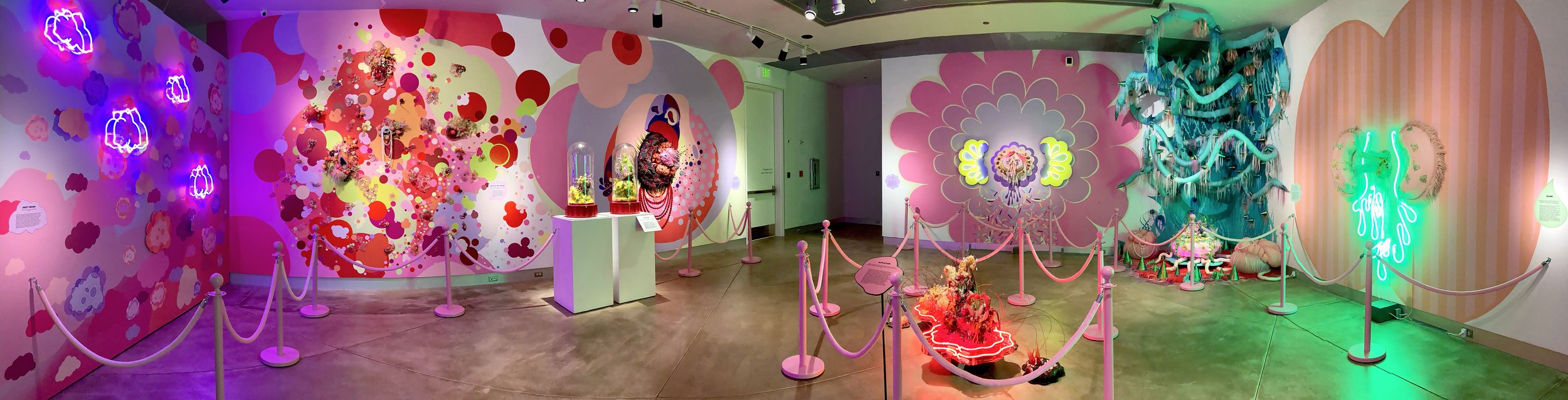
Artist Statement
Desire is fundamental to human existence, shaping both personal identity and broader cultural behavior. In a world saturated with instant gratification, my work explores the tension between carnal longing and empathy, examining how desire produces vulnerability and unsettles the body's sense of certainty. I am drawn to moments where attraction and discomfort coexist, where intimacy slips into exposure, and where control begins to fracture. Desire is neither stable nor benign; it is volatile, excessive, and inherently contradictory. Like glass, it resists containment and resolution, lingering in states of variability long after certainty dissolves. By inhabiting this tension, my work examines how desire shapes behavior, identity, and embodied experience.
Glass is a material suspended between opposing states, making it uniquely capable of expressing the vulnerability of desire. Historically associated with refinement and clarity, glass has come to exemplify cultural ideals of perfection and control that I deliberately unsettle. Rather than preserving its perceived purity, I allow the material to remain visceral through friction, accumulation, and excess. I collapse the boundaries between blown glass, casting, flameworking, fusing, and neon, transforming glass from a discrete object into a sensory medium. As it converges with hair, fabric, beads, vinyl, and synthetic materials, distinctions between the organic and manufactured dissolve, allowing each material to resist its conventional role. Through these material relationships, glass exists in a continual state of ambiguity. Shifting between fragility and resilience, seduction and threat, revelation and concealment, it enacts the fluidity and contradictions of desire itself.
My installations engage the body, treating sensation as a form of knowledge. By eliciting instinctive responses before conscious interpretation can take hold, they reveal how desire is first experienced physically rather than intellectually. Materials that glimmer, snag, soften, or repel provoke visceral reactions, drawing viewers into moments where attraction and discomfort coexist. As viewers negotiate impulses to touch, recoil, or linger, they become active participants rather than detached observers, experiencing desire as an embodied encounter instead of an abstract concept. In this space between seduction and unease, intimacy emerges through tension, revealing the body not simply as the subject of desire, but as an active participant in its construction.